Conservation Initiatives
Adopt a Sea Turtle Nest
Sea Turtle Nesting Season Begins May 1
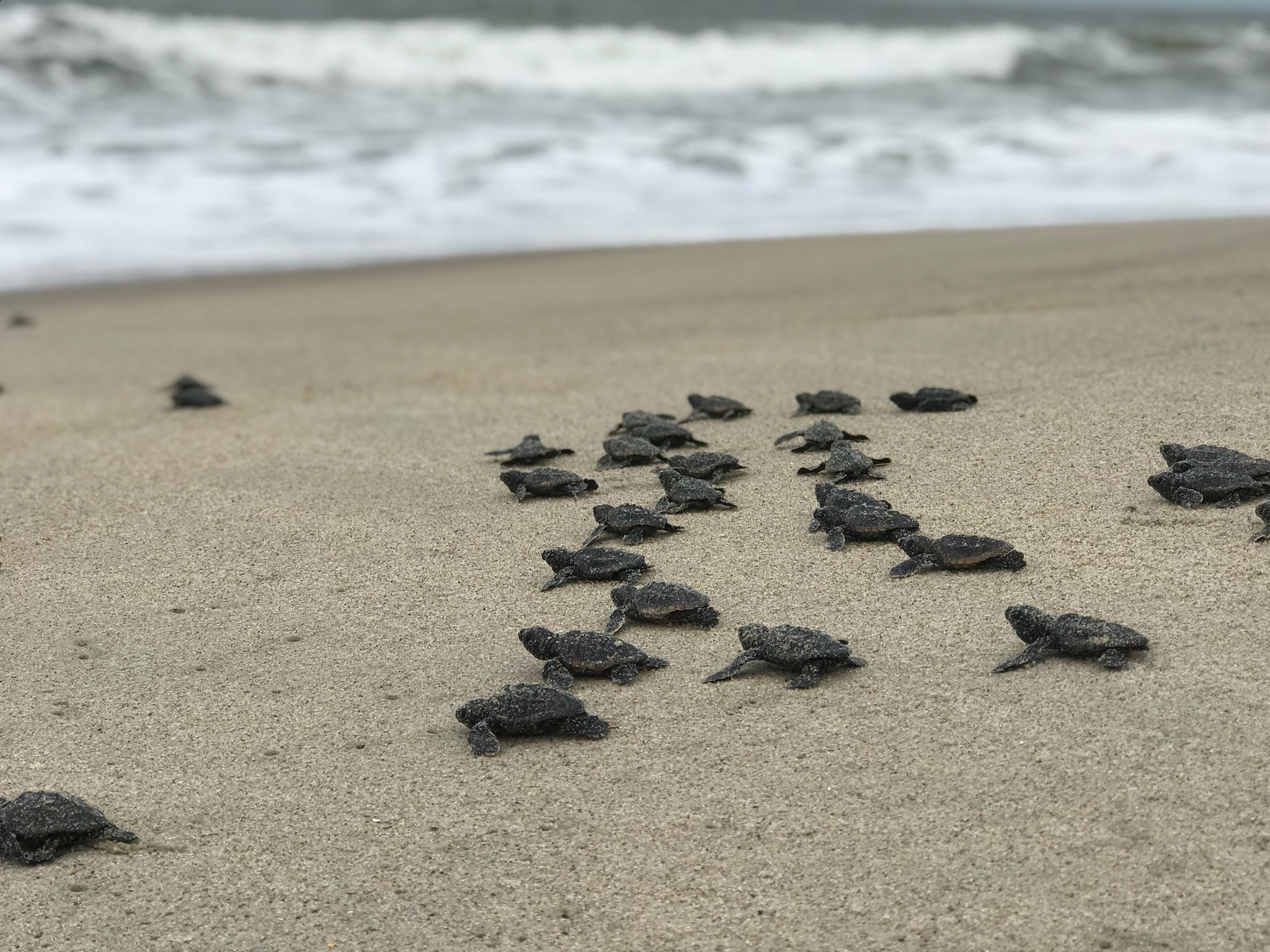
From May to August, sea turtles return to nest on North Carolina’s beaches. At Fort Fisher, Loggerheads are most common, followed by Green Sea Turtles. The endangered Kemp’s Ridley is the rarest and only occasionally nests in NC.
How you can help:
Avoid marked nests and dunes
Turn off beach lights at night
Fill in holes and flatten sandcastles
Pick up all trash and beach gear
Never approach nesting turtles
Let’s protect these amazing animals and their nesting grounds!

Adopt a Sea Turtle Nest at Fort Fisher!
Want to be part of sea turtle conservation? There are only 18 Sea Turtle Nests up for adoption at Fort Fisher State Recreation Area!
How it works:
Click on the link below to join the adoption list—nests are assigned first-come, first-served. If you don’t see the adoption option, all nests have been adopted.
Your $50/person for 1 nest donation includes:
A custom adoption certificate mailed in December with information about the assigned nest.
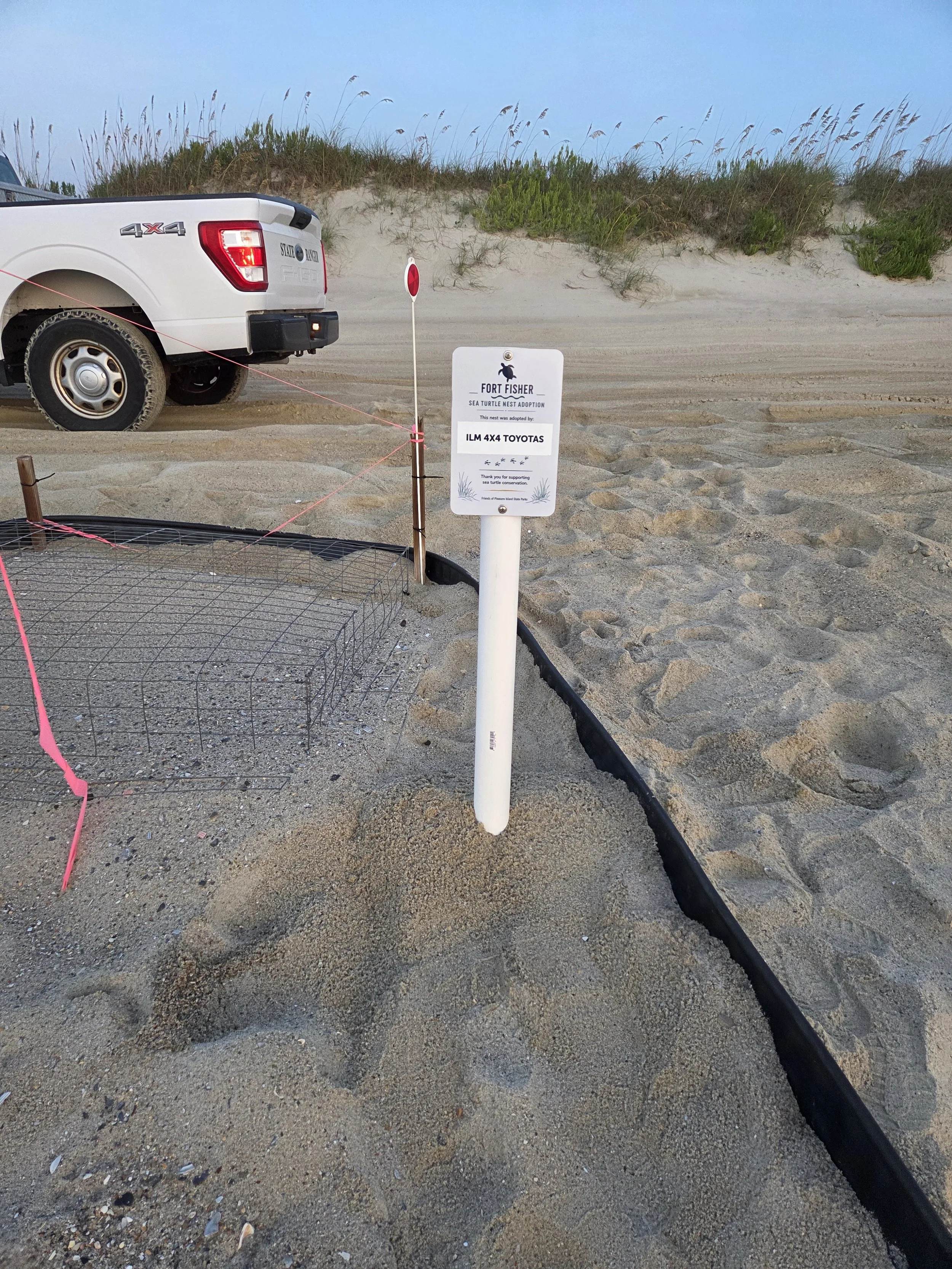
The Adoptee’s name displayed at their assigned nest.
Your name on our Community Conservationist Plaque at the Fort Fisher Visitors Center
Leave your mark on conservation—and help protect these incredible creatures for generations to come!
MPORTANT CHECKOUT INSTRUCTIONS
During checkout, select “Add a note for the seller” and enter the name exactly as you want it to appear on both the nest sign and the permanent Community Conservationist Plaque.
If the adoption is a gift, enter the gift recipient’s name. Please check the spelling carefully before completing the order.
About Nest Monitoring
Adopting a nest is a symbolic way to support sea turtle conservation.
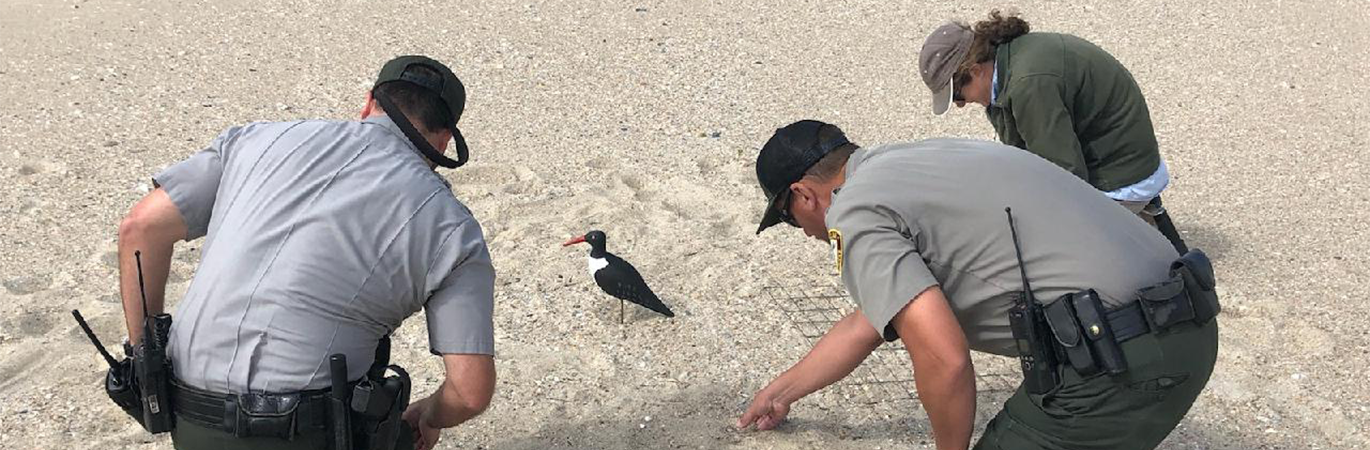
Sea turtles, nests, and hatchlings are sensitive to disturbance. For their protection, all nest monitoring, nest sitting, and conservation work at Fort Fisher is performed only by trained sea turtle volunteers following established conservation procedures.Therefore, It does not include sitting at or monitoring the nest you have adopted.
Adoptees support this work through their donation, help raise public awareness, and demonstrate their commitment to protecting sea turtles and their nesting habitat.
We currently have 23 nests remaining for adoption, although availability may change based on nest viability and the timing of the season.
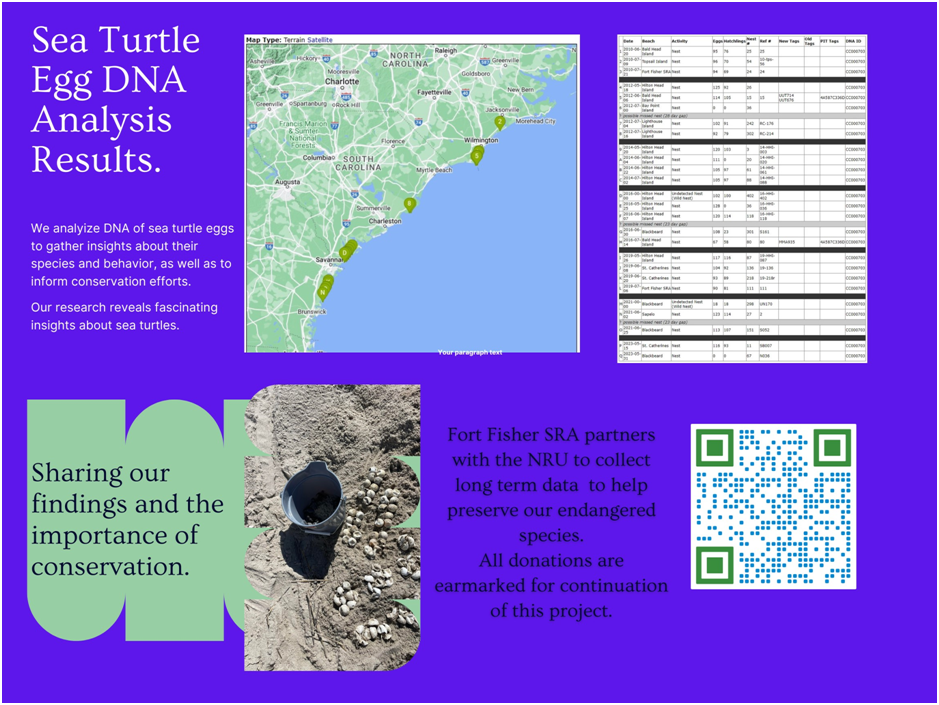
DNA Analysis
The Fort Fisher Sea Turtle Monitoring Program participates in the Loggerhead Sea Turtle Genetics Project with the Northern Recovery Unit (NRU), which consists of Sea Turtle Monitoring programs from Georgia to Virginia.
Project Need: The loggerhead sea turtle is an endangered species that serves as an indicator of the ecosystem health in open ocean and coastal habitats. The number of loggerheads in the southeastern US declined dramatically from human related activities such as commercial fishing and negative impacts to their nesting beaches. After decades of nest protection and the implementation of turtle excluder devices in shrimp trawl nets, the annual number of nests has increased from its lowest point in 2004 along with a decrease in the number of adult turtles drowning in shrimp nets. However, nest numbers are still below historic levels.
Project Activities: Counting nests provides clues about how many mother turtles there are in the population, but alone does not provide the nesting histories of individual females that are needed for accurate population models. Since 2008, DNA markers have been used to identify individual loggerhead turtles from an egg sample. Since 2010, nesting histories have been developed for all known loggerhead nests in Georgia, SC and NC.Nesting history is critical to management and population recovery.
Expected Benefits: Many important questions remain unanswered. Because loggerhead turtles take decades to mature and live a long time, estimating female survival, new female recruitment, age of maturity, and how long they reproduce require long term data collection. About 25-35% of the females in recent years are new females we assume are nesting for the first time –each year this percentage is increasing.
Our goal is to continue this research until analysis reveals a majority of new nesting females are daughters of a mother who we know has nested previously. In addition, new aging techniques will make it possible to estimate the age of the loggerhead from a genetics sample.
It is critical that we keep collecting samples at the same sites, without any gaps in space or time, to ensure accurate estimate of age at sexual maturity and reproductive life span.
All donations are welcomed and are forwarded directly to the Northern Recovery Unit for continued DNA analysis.